
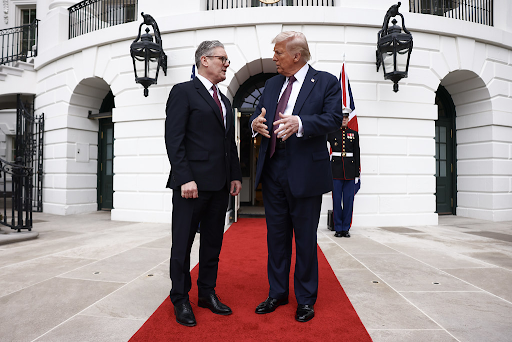
A new and fundamental divide has opened between the United States and the United Kingdom, neatly summarized as “Recognition First vs. Negotiation First.” This was laid bare in London on Thursday when President Donald Trump publicly challenged Prime Minister Keir Starmer’s plan to unilaterally recognize a Palestinian state.
The “Negotiation First” camp, led by the U.S. and championed by Trump, insists that statehood is the final prize to be awarded only after a comprehensive peace treaty is signed. This policy is designed to maintain leverage and incentivize compromise. The U.S. recently affirmed this stance by voting against a UN resolution that promoted a two-state solution, isolating itself from global opinion.
The “Recognition First” camp, which the UK under Starmer is now joining, argues that the old model has failed. They believe that granting recognition can act as a “catalyst,” creating a more balanced and urgent environment for negotiations. It is a strategy of using the end goal to reshape the process of getting there.
This public debate between Trump and Starmer has brought this philosophical clash into sharp focus. It is not just a minor disagreement on timing, but a fundamental conflict over the mechanics of peacemaking and the role of international powers.
The state visit has become the unlikely venue for this defining moment in the “special relationship.” Starmer has delayed the implementation of his policy as a diplomatic courtesy, but the UK’s shift to the “Recognition First” camp is a significant development. This new divide is now a key feature of the transatlantic landscape.