
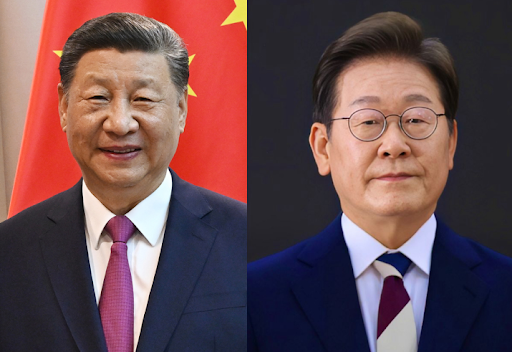
The immense pressure on South Korea, squeezed between its U.S. security alliance and its dependence on China’s economy, was laid bare during Chinese President Xi Jinping’s state visit. President Lee Jae Myung was forced to navigate these competing interests while also facing domestic protests and a hostile North Korea.
The visit, which came just after one from U.S. President Trump, put the U.S.-China rivalry front and center. Lee had to raise sensitive issues stemming from the U.S. alliance, notably the 2017 THAAD missile system dispute, which China views as a major provocation. He also discussed Chinese sanctions on a U.S.-linked firm, further highlighting Seoul’s position in the middle.
While managing this great-power friction, Lee was also confronted by his own public. Hundreds of protesters rallied in Seoul against Chinese influence, demonstrating a growing domestic skepticism of the close economic ties Lee’s government is pursuing. This public anger complicates Lee’s diplomatic maneuvering.
Lee’s attempt to find a breakthrough on his own terms—by asking Xi to help restart dialogue with North Korea—was a resounding failure. Pyongyang’s immediate and public rejection of the idea as a “pipe dream” underscored the limits of Seoul’s influence, even with China’s potential backing.
For China, the visit was simpler. President Xi called for “mutual respect” and his state media celebrated the signing of seven new economic agreements, including a currency swap. This focus on economics allowed Beijing to rise above the political drama, leaving Seoul to manage the complex and contradictory pressures alone.