
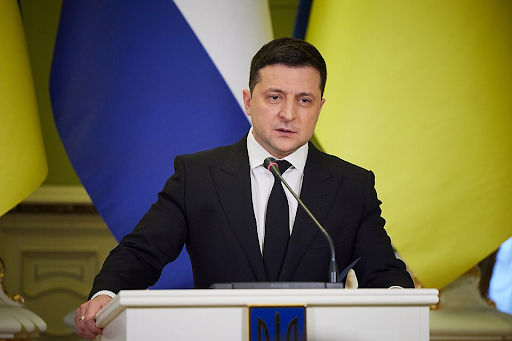
Ukraine’s development of $1,000 drone interceptors to counter one of the most widespread aerial weapons systems in use today represents a textbook example of asymmetric innovation, according to President Volodymyr Zelenskyy. In announcing that Ukraine would share this expertise with US and Middle Eastern allies, he framed Ukraine’s achievement as a model for how smaller, less-resourced actors can compete effectively against technologically sophisticated threats.
Zelenskyy confirmed conversations with leaders from the UAE, Qatar, Bahrain, Jordan, and Kuwait about defense cooperation, and stated that a formal US request for drone defense equipment and technical specialists had been fulfilled. He described Ukraine’s offer as a transfer not just of technology but of the problem-solving philosophy that produced it — a philosophy of finding clever, practical solutions rather than expensive, conventional ones.
The David and Goliath dynamic is visible throughout Ukraine’s drone defense story. Russia deployed tens of thousands of Iranian-made Shaheds — a mass-produced weapon designed to overwhelm conventional defenses through sheer volume. Ukraine responded not by trying to match Russia’s scale with expensive systems, but by developing interceptors costing as little as $1,000 that could be produced quickly and deployed in large numbers.
The result was a defense that matched the economics of the threat rather than the economics of conventional warfare. Ukraine’s interceptors don’t just destroy Shaheds — they do so in a way that keeps the cost per kill affordable enough to sustain across thousands of engagements. This approach has proved more effective than the multimillion-dollar systems deployed by other nations against the same threat.
Zelenskyy connected Ukraine’s asymmetric success to its broader diplomatic message, noting that assistance flows to nations that support Ukraine’s security and peace efforts. He acknowledged the disruption of the Iran crisis to peace negotiations, but expressed confidence that Ukraine’s model of innovative, practical problem-solving — demonstrated both on the battlefield and in its expanding defense partnerships — will continue to define its approach to the challenges ahead.