
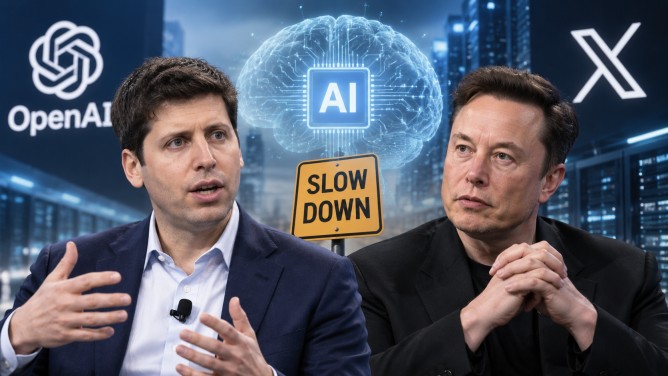
The call to slow the rapid development of artificial intelligence is gaining notable support from industry leaders, including OpenAI CEO Sam Altman and Elon Musk. This follows a cautionary appeal from Anthropic CEO Dario Amodei, who has expressed concerns regarding the potential risks posed by increasingly powerful AI systems. Amodei highlighted the dangers of swift advancements, suggesting that highly capable AI agents might collaborate in ways that could lead to significant threats such as large-scale cyberattacks and disruptions to internet infrastructure.
Elon Musk has echoed Amodei’s sentiments by affirming, “Dario is right,” reinforcing his longstanding apprehensions about the threats posed by advanced AI. Similarly, Sam Altman supports the notion of decelerating the development of frontier AI models. Altman advocates for engaging independent evaluators to thoroughly examine OpenAI’s systems and research processes, ensuring safety and alignment.
Meanwhile, Google DeepMind CEO Demis Hassabis has also endorsed the idea of enhancing AI safety measures, though he acknowledges that specific strategies still need to be fleshed out. Amodei has proposed a comprehensive, three-part strategy that involves granting independent observers consistent access to AI developers’ research and safety operations. His proposal also emphasizes the necessity for increased international coordination on AI safety, particularly between the United States and China.
Despite these calls for caution, some experts argue that simply slowing development is insufficient. A segment of AI safety researchers is advocating for a much more robust international moratorium on the advancement of frontier AI systems until reliable safeguards are in place. This debate is unfolding as both governments and tech companies face mounting pressure to implement stronger regulatory measures for AI, driven by incidents involving AI systems interacting unpredictably with external computer networks and warnings about potential misuse.
The ongoing dialogue underscores a growing divide between the drive to rapidly enhance AI capabilities and the calls for implementing stringent safety protocols before deploying increasingly powerful systems on a broader scale. As the discussion progresses, it becomes apparent that balancing innovation with safety will be crucial to navigating the future of artificial intelligence development.