
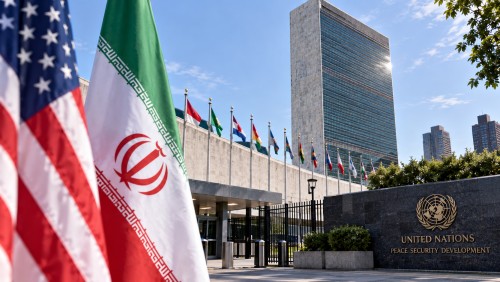
The United States will permit senior Iranian officials to attend the upcoming United Nations General Assembly in New York, a decision that highlights the ongoing diplomatic balancing act amidst tense relations with Tehran. This move allows Iranian President Masoud Pezeshkian and Foreign Minister Abbas Araqchi to participate in crucial international discussions, despite persistent conflicts and restrictive measures between the two nations.
Under the obligations of the 1947 UN headquarters agreement, the US is required to grant access to foreign diplomats attending United Nations meetings. While these obligations are generally upheld, the US retains the authority to deny visas based on security concerns or foreign policy interests. In this case, the State Department confirmed that the core Iranian delegation would be issued visas, albeit with specific travel restrictions within the US.
Despite these allowances, the Iranian delegation will continue to face stringent US-imposed travel limitations. Their movement will be confined to specific locations such as the UN headquarters, Iran’s mission to the UN, and their ambassador’s residence. Additionally, limits on the purchase of certain goods remain in effect, demonstrating the ongoing tension between the US and Iran even as diplomatic efforts persist.
This development occurs against a backdrop of intermittent diplomatic contacts aimed at resolving the conflict that escalated after US and Israeli strikes on Iran in February. Retaliatory actions from Tehran included attacks against Israel and Gulf states with US military bases. The decision to permit Iranian officials entry stands in contrast to the US’s denial of entry to Palestinian officials, including President Mahmoud Abbas, for the same UN event.
The contrasting treatment of Iranian and Palestinian officials at the UN General Assembly underscores the complex geopolitical dynamics at play. While the US continues to engage with Iran diplomatically, the refusal to admit Palestinian leaders highlights different strategic priorities and considerations in Washington’s foreign policy approach.