
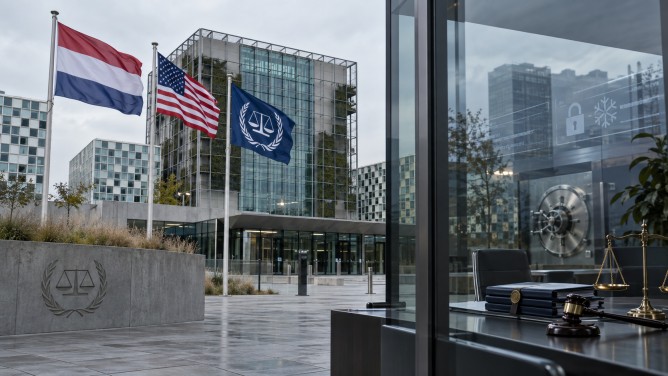
As the United States considers expanding sanctions on the International Criminal Court (ICC), the Netherlands is preparing to mitigate potential disruptions to the tribunal’s operations. The sanctions could jeopardize essential functions such as paying staff, protecting witnesses, and maintaining detention facilities by restricting the ICC’s access to financial services and other critical resources.
The Trump administration has already imposed sanctions on several ICC officials, objecting to the court’s investigations involving U.S. and Israeli personnel, and accusing the tribunal of overstepping its authority. With the possibility of extending these sanctions to the ICC as a whole, transactions involving U.S. companies and services could be severely limited, affecting the court’s banking, insurance, and technology operations.
In response to these potential challenges, the ICC has been strategically shifting some of its services away from U.S.-based providers. The court is actively reviewing its financial and technological arrangements to ensure continued functionality amid increasing U.S. pressure. Meanwhile, the Netherlands, as the ICC’s host country, is exploring measures to support the tribunal in maintaining its critical activities.
Established in The Hague in 2002, the ICC prosecutes individuals for genocide, crimes against humanity, war crimes, and aggression when national legal systems fail to act. As tensions between Washington and the ICC escalate, the Netherlands’ involvement highlights the international community’s efforts to uphold the court’s mission despite geopolitical disputes.