
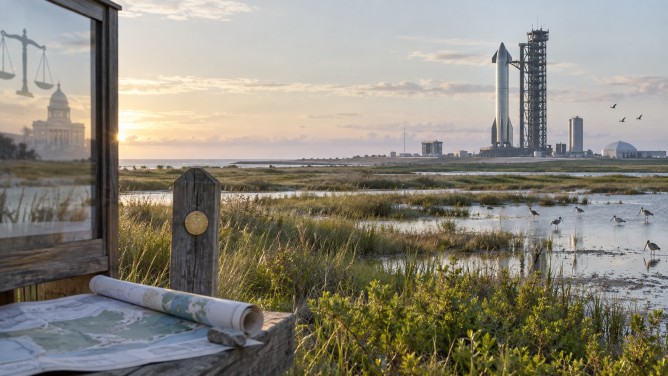
A federal judge’s decision to allow the Trump administration to transfer over 700 acres of federal wildlife refuge land in Texas to SpaceX could have significant implications for both environmental conservation and space exploration. The ruling enables SpaceX to move forward with its expansion plans near the US-Mexico border, potentially advancing its rocket launch capabilities while stirring environmental concerns.
US District Judge Fernando Rodriguez Jr. denied a request from environmental and tribal groups seeking to halt the land exchange. These groups argued that the transfer could exacerbate environmental risks in the Lower Rio Grande Valley National Wildlife Refuge, affecting wildlife habitats and historical sites. Nevertheless, the judge found insufficient evidence to demonstrate immediate harm from the transaction, emphasizing the potential impact on SpaceX’s developmental timelines and contractual obligations if the project were delayed.
The proposed land swap involves SpaceX exchanging 683 acres of its own land for a portion of the 103,000-acre wildlife refuge. This newly acquired land would be strategically closer to SpaceX’s existing launch facility, allowing for enhanced operations. While the environmental groups have vowed to continue their legal fight, the US Fish and Wildlife Service has previously assessed and concluded that the exchange would not lead to significant environmental damage. Instead, it suggested the deal could offer long-term conservation benefits by improving habitat connectivity in the region.
Despite the court’s decision, the lawsuit challenging the land transfer is still active, reflecting ongoing tensions between industrial development and environmental stewardship. As SpaceX pursues its ambitious goals, the outcome of this legal battle will be closely watched by both conservationists and the space industry.