
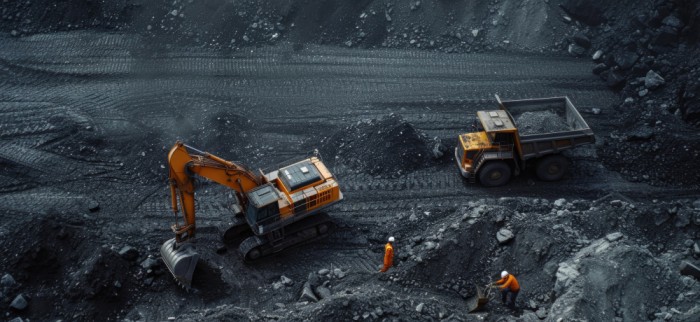
President Donald Trump has unveiled a significant $700 million federal initiative aimed at bolstering the coal industry in the United States. This move, sanctioned under the Defense Production Act—a law traditionally activated for national emergencies—seeks to sustain and expand coal operations. The initiative will see funds directed to over a dozen coal-fired power plants across various states, with the intention of keeping current facilities running, reviving inactive plants, and establishing new infrastructure pertinent to coal production and exports.
As part of the plan, two new coal power facilities are set to be constructed in Alaska and West Virginia. Additionally, a new coal export terminal will be developed, and an existing facility in Maryland is slated for reopening. This strategy is presented as a method to stabilize energy prices and reinforce the domestic energy supply in response to burgeoning demand. Advocates of the policy suggest that it will secure energy reliability and cater to the increasing power requirements, especially from industrial sectors.
The states benefiting from this program include West Virginia, Kentucky, North Carolina, Indiana, Tennessee, Arkansas, Arizona, Oklahoma, North Dakota, and Wisconsin. Officials have highlighted that this initiative is a component of a larger effort to rejuvenate the coal sector, which has seen a marked decline over recent decades due to stiff competition from natural gas and renewable energy sources.
However, the announcement has drawn criticism from environmental groups, who argue that coal remains a significant contributor to air pollution and greenhouse gas emissions. They caution that continued investments in coal could exacerbate health issues and climate change effects. Experts also point out that coal struggles to compete with more cost-effective energy options like natural gas and renewables. Despite these concerns, representatives from the coal industry have welcomed the initiative, asserting that increased coal production could enhance grid stability in light of rising electricity demands.